Velvet Ant Bite: Symptoms, Danger & Treatment (2026)
A velvet ant sting has been rated among the most painful stings any insect in North America can deliver, which is exactly why it earned the nickname "cow killer." The venom itself is a different story: it's built to hurt, not to poison, and serious complications are rare.
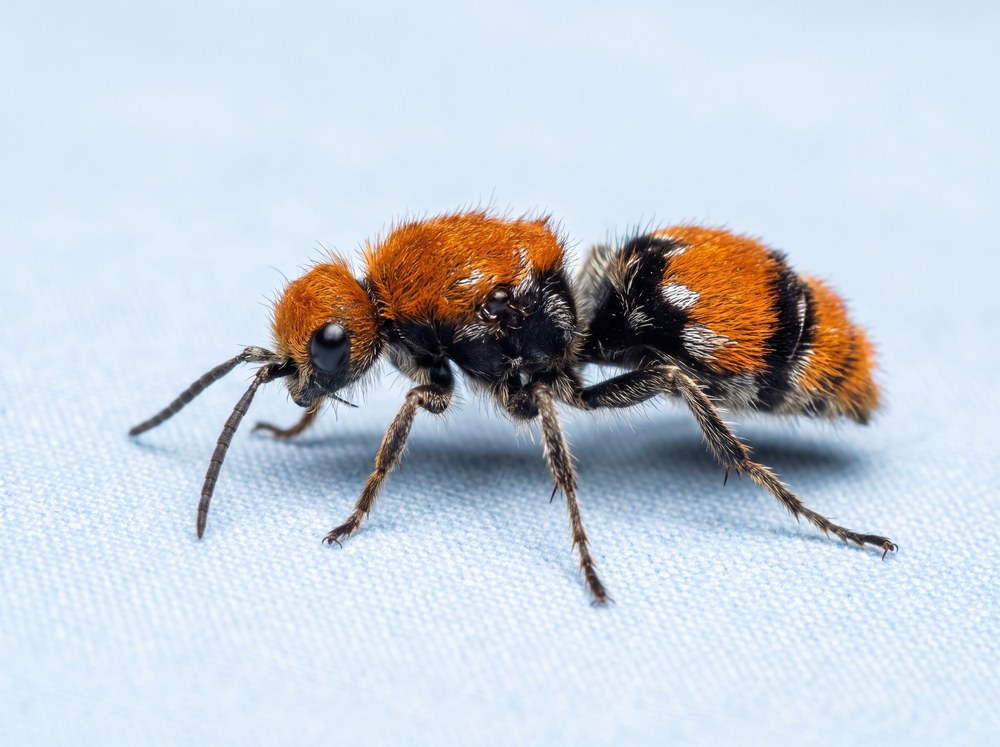
Is a velvet ant bite dangerous?
For the vast majority of people, a velvet ant sting is intensely painful but medically minor. The venom itself is not particularly toxic, and once the initial burst of pain fades, usually within 30 to 60 minutes, what's left behind is ordinary local swelling, redness, and tenderness that resolves within a few days, similar to a bad bee sting.
The real risk isn't the sting itself, it's an allergic response to it. In someone with an insect-venom allergy, a single sting can trigger anaphylaxis: throat swelling, difficulty breathing, and a rapid drop in blood pressure. This is rare and not unique to velvet ants (the same risk exists with bee, wasp, and fire ant stings), but it's the outcome worth watching for in the first hour. For background on the insect responsible, the illustrated velvet ant species profile from Insectio breaks down which species carry the most potent stings.
Children, people with a known history of insect-sting allergy, and anyone stung multiple times in a short period face a somewhat higher risk of a severe reaction, though most people in every age group tolerate a single sting without complication.
Bottom line: treat the first hour as the highest-risk window. If breathing, swallowing, and facial swelling are unaffected by then, the sting is very likely to follow the ordinary, days-long healing path, but keep monitoring for signs of infection over the following week.
Should You See a Doctor?
A short decision tree based on CDC and Mayo Clinic guidance.
1 / 3 Are you having trouble breathing, throat tightness, or swelling of the face, lips, tongue, or eyelids?
2 / 3 Do you have hives spreading beyond the sting site, dizziness, fainting, or vomiting?
3 / 3 Has the redness, swelling, or pain around the sting kept getting worse for more than 48 hours?
What a velvet ant bite looks like
The pain arrives immediately and without warning, there is no slow burn or delayed itch. Most people report an explosive, sharp sting the instant skin makes contact with a female velvet ant, whether that's a bare foot in the grass or a hand that picked one up.
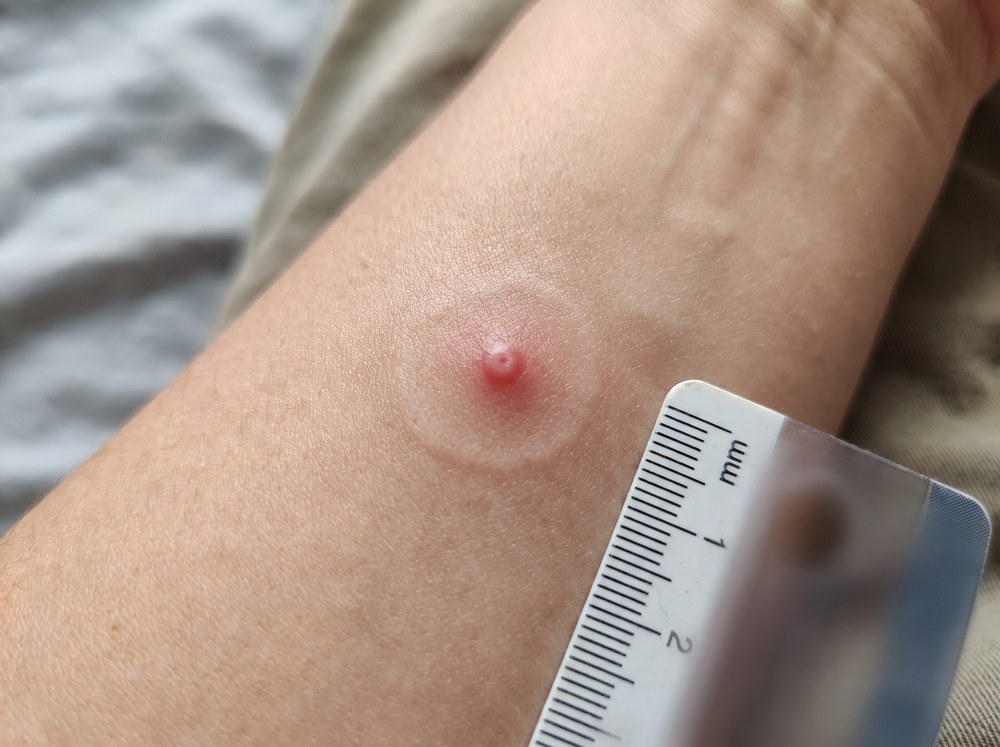
A typical velvet ant sting: one contained, swollen welt with a faint central puncture.
In the first couple of hours, the sting site is usually a small, raised, red welt no bigger than a fingertip, surrounded by a wider ring of pink swelling. Some people notice a tiny black dot at the very center of the mark, that's the puncture left by the stinger itself, and it can be gently scraped away with a flat edge like a credit card.
There's no classic bullseye or blistering pattern to look for here. Unlike a spider bite that might develop a dark center, or a tick bite that can leave a spreading rash, a velvet ant sting almost always stays as one contained, swollen spot exactly where contact happened.
Because the swelling and redness can look similar to other stinging-insect marks, people sometimes assume they were bitten by a large ant or attacked by several fire ants at once. The giveaway is context: one sudden, severe sting from one large, fuzzy, brightly colored insect seen alone on the ground points squarely to a velvet ant rather than a swarm-based fire ant encounter.
Not sure if your mark matches what a velvet ant sting looks like?
Check Your SymptomsVelvet ant sting symptom timeline
Hours 0–2. Explosive pain peaks in the first few minutes then eases into a dull ache. Localized swelling and redness begin to form directly around the sting.
Hours 2–8. Sharp pain has usually faded to soreness. Swelling and redness may continue to spread slightly outward, and itching often sets in as the initial pain fades.
Day 1–2. Swelling and redness typically peak, sometimes with a hardened, warm lump at the site. Itching is often the most bothersome symptom during this window.
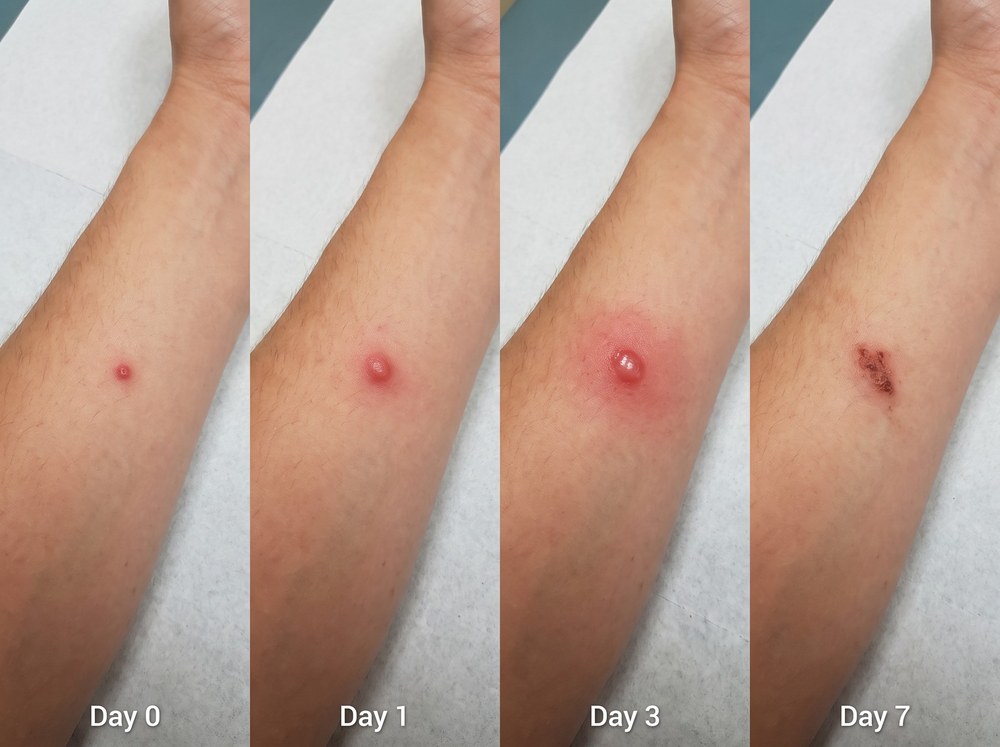
Typical healing progression for an uncomplicated velvet ant sting.
Day 3–7. For most people, swelling and redness are visibly fading, and the site is on its way to normal skin by the end of the week. If the area is still expanding, feels warmer than surrounding skin, or is producing pus at day 3 or later, that points to infection rather than normal healing, and it's time to see a doctor.
Bite Symptom Checker
Check every symptom you're currently experiencing. Get a plain-English risk read.
Still weighing whether these symptoms match a velvet ant sting or something else entirely? A quick identify insect by photo check can help you compare the culprit itself, not just the reaction.
Treatment for a velvet ant sting
Wash and elevate. Clean the sting site with soap and water as soon as possible, and gently check for a tiny black dot, the embedded stinger tip, which can be scraped off with a flat, hard edge like a credit card rather than pinched with fingers. If the sting is on an arm or leg, keep it elevated to reduce swelling.
Cool, don't heat. A cold compress or ice pack wrapped in a thin cloth, applied for 10 to 20 minutes at a time, is the standard way to blunt both pain and swelling. Heat has no useful role here and can make swelling worse.
OTC support. An oral antihistamine such as cetirizine or loratadine helps with itching and swelling, and a standard pain reliever like ibuprofen or acetaminophen takes the edge off the initial sting pain. Hydrocortisone cream or calamine lotion applied a few times a day can calm the skin further.
Watch, don't wrap. Leave the area uncovered so you can see how it's changing, and check it at least twice a day for the first 48 hours. If swelling, redness, or pain is still increasing after two days, or the area starts looking infected, that's the signal to call a doctor rather than wait it out.
Still weighing whether to head to urgent care?
Run the Decision TreePreventing another velvet ant sting
Most velvet ant stings happen because someone picked one up, thinking the large, fuzzy, brightly colored insect was harmless or just wanted a closer look. The single most effective prevention is simple: admire from a distance and never handle one, even briefly.
Because these insects favor bare, sandy, or lightly vegetated ground in pastures, yards, and trailheads during the warm months, closed shoes and long pants offer real protection when you're walking through that kind of terrain in summer. If you're not sure whether the ant-like insect you're looking at is actually a velvet ant, you can identify a velvet ant instantly with the BugKnow app before getting close enough to find out the hard way.
If you're seeing this insect regularly around the same patch of yard, a closer look at the local ground-nesting bee or wasp population it targets is worth it.
Which Bug Bit Me?
Not sure it was a velvet ant? Answer three questions and we'll narrow the list.
Velvet ant (left) vs. fire ants (right): one large solitary insect versus a swarm of tiny ones.
Frequently asked questions
Do velvet ants bite or sting?
Velvet ants can technically bite with their mandibles, but the reaction people search for and fear is almost always the sting. Only females carry a stinger, a modified egg-laying organ tucked at the tip of the abdomen, and it delivers venom when the insect is handled, stepped on, or otherwise provoked. Males have wings and cannot sting at all. If you were stung outdoors on bare skin near sandy soil, a female velvet ant sting is the far more likely explanation than a bite.
Can a velvet ant sting kill you?
No documented human deaths have been tied to velvet ant venom itself, the "cow killer" nickname refers to how painful the sting feels, not its actual toxicity. The sting is rated among the most painful in the insect world, but the venom is considered low in toxicity. The real danger is a severe allergic reaction in someone sensitive to insect venom; anyone showing signs of anaphylaxis needs emergency care immediately.
What does a velvet ant sting feel like?
Entomologists who study insect stings rank the velvet ant sting as one of the most intense in North America, just below insects like the tarantula hawk. It has been described as an explosive, burning pain similar to hot oil splashing across the skin. The good news: despite the intensity, the sharpest pain typically eases within the first hour, leaving milder soreness, redness, and swelling that fades over the following days.
How do I tell a velvet ant sting from a fire ant sting?
A velvet ant sting is a single, sudden, intensely sharp sting from a large (up to 1 inch), fuzzy, brightly colored insect usually seen alone on open, sandy ground. Fire ant bites tend to come in clusters of small, itchy welts that develop white pustules within a day, from tiny ants swarming out of a mound. If you only felt one explosive sting and saw one large hairy ant, think velvet ant, not fire ant.
Are velvet ants aggressive, and why do they sting?
Velvet ants are solitary and not aggressive; they spend most of their time searching for the underground nests of bees and wasps to parasitize. Stinging is purely defensive; a female typically only stings when picked up, stepped on, or otherwise physically threatened. Their bright warning coloration, tough exoskeleton, defensive odor, and audible squeaking are all meant to warn predators off before a sting is ever needed.
Why are velvet ants called "cow killers"?
The nickname comes purely from the intensity of the pain, not any real toxicity. The sting was described as so excruciating that early observers joked it felt powerful enough to kill a cow. No credible account or research supports the idea that a velvet ant sting can actually harm an animal that large; the venom's job is to hurt, not to poison.
Can male velvet ants sting?
No. Only female velvet ants have a stinger, since it evolved from the same organ females use to lay eggs. Males have wings, a slimmer wasp-like body, and no stinger at all, so they are physically incapable of stinging even if handled. If you were stung, the culprit was a wingless female, most likely encountered on bare or sandy ground.
How long until I know if a velvet ant sting is serious?
Watch the first 30 to 60 minutes closely. If breathing trouble, facial or throat swelling, dizziness, or widespread hives appear in that window, treat it as a medical emergency. For a typical, non-allergic reaction, the sharpest pain fades within an hour and swelling or redness should be trending downward by day two; a reaction still worsening after 48 hours warrants a call to a doctor.
Take 30 seconds to check your sting now.
Check My Risk Level